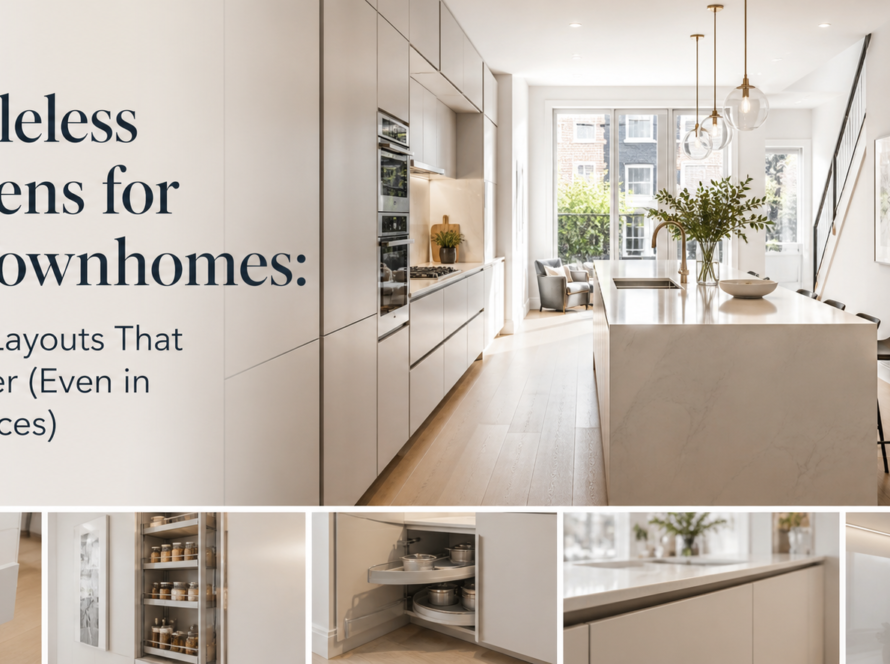
Fall is the season when many homeowners in Washington DC, Northern Virginia, and Maryland decide it is finally time to renovate the kitchen. Before you pick a color or a countertop, there is a more basic question that shapes the look, the storage, and the long-term durability of your project: what kind of cabinet construction should you buy?
Most American kitchens still use traditional face-frame cabinets. Frameless cabinets, often called European-style cabinets, are now the preferred choice for modern and transitional homes across the DMV. Here is a plain-language comparison to help you decide.
What Is the Difference Between Frameless and Face-Frame Cabinets?
A face-frame cabinet has a solid wood frame attached to the front of the cabinet box. The doors mount to that frame, so part of the frame is always visible around the door and it narrows the opening.
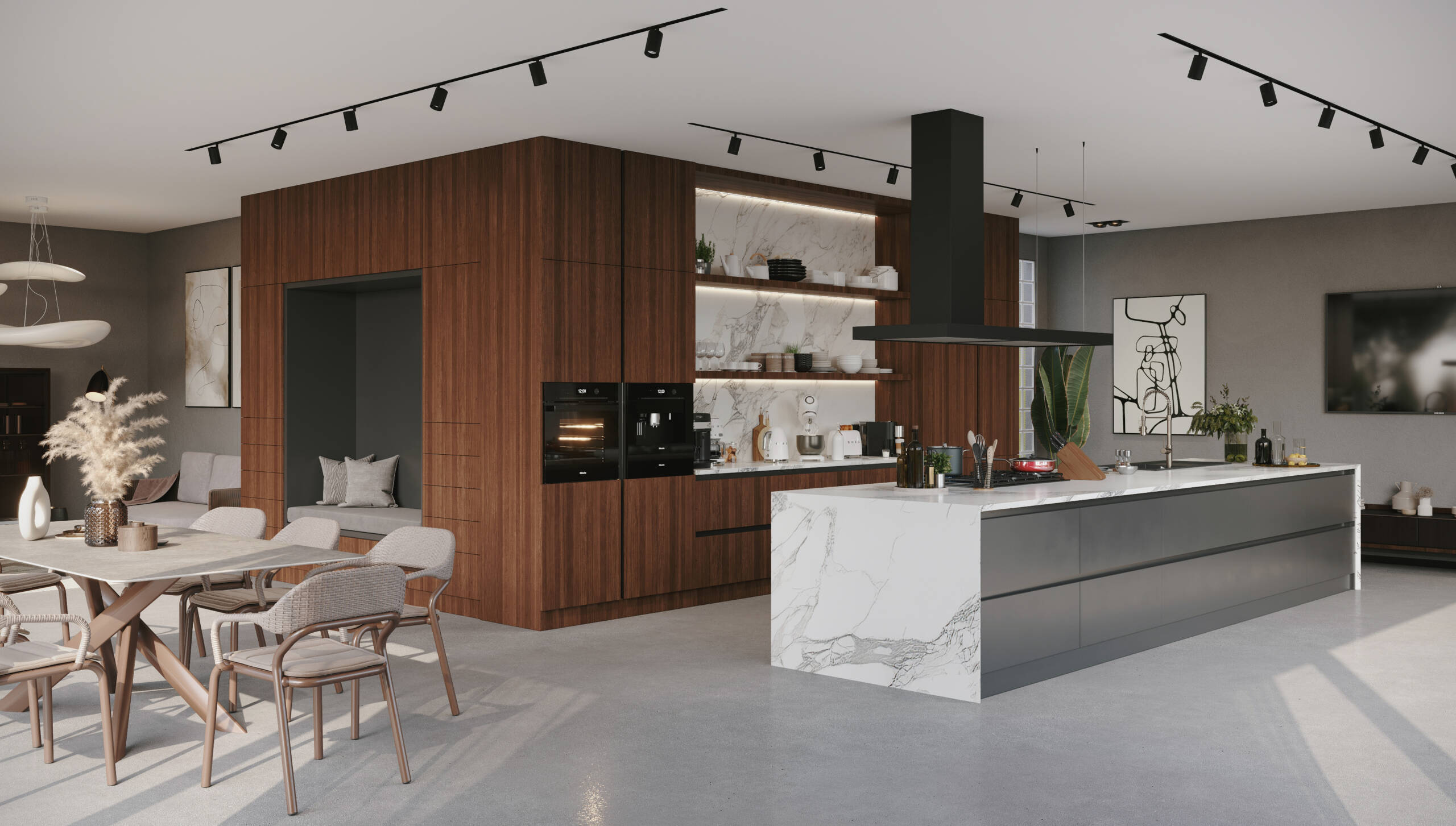
A frameless cabinet has no front frame. The box itself is the structure, and the doors cover the full front edge. The result is a cleaner, flatter look and a wider opening into every cabinet.
Why Frameless Cabinets Work So Well in DMV Homes
- More usable storage. Without a frame, drawers can be wider and shelves can hold larger pots, trays, and small appliances. In townhomes and condos in Arlington, Alexandria, and Washington DC, every inch counts.
- A modern, seamless look. Slim gaps and flat door fronts suit handleless, slab, and minimalist designs that are popular right now.
- Easier access. Full-width openings make it simpler to reach items at the back of a cabinet.
- Precise, factory-built consistency. Frameless cabinets are built on CNC-controlled equipment, which keeps panels and door alignment consistent from the first cabinet to the last.
When Face-Frame Cabinets May Still Make Sense
Face-frame construction is not a bad choice. Some older homes in Maryland and Virginia have classic, traditional interiors where a framed door profile feels right. Face-frame boxes can also be a little more forgiving in houses where the walls are not perfectly straight. If your goal is a very traditional look, it is worth talking through both options with a designer before you commit.
Five Questions to Ask Before You Order Cabinets
- Who designs the layout? Good cabinetry starts with space planning: where you cook, prep, store, and walk.
- How are the cabinets made? Ask about panel materials, edge banding, hinges, and drawer systems.
- Is the work custom-sized? Custom sizing removes filler strips and wasted gaps, especially around columns, windows, and angled walls.
- Who installs them? Even excellent cabinets look average if the installation is rushed.
- What is the full timeline? Design, production, shipping, and installation all take time. Starting in the fall helps you plan around winter holidays and spring entertaining.
Are Frameless Cabinets the Same as European Cabinets?
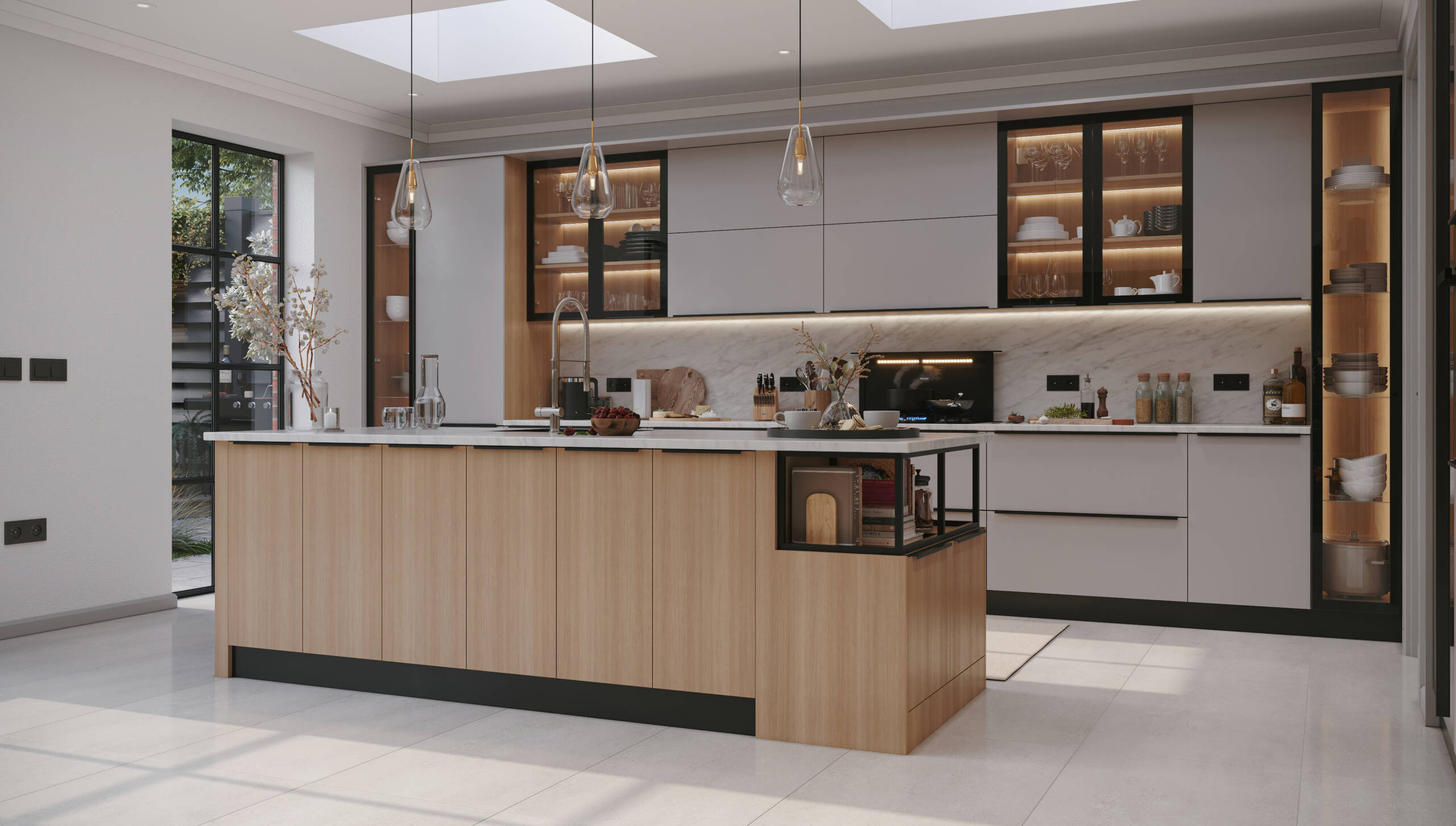
In most cases, yes. When designers talk about European kitchen cabinets, they usually mean frameless (full-access) construction: slab or minimal-profile doors, tight reveals, concealed hinges, and clean horizontal lines. It is the standard in European kitchens and the reason the style looks so sleek in modern DMV homes. You can see this approach in our Sleekova and Axis kitchens, and our related guide on modern European cabinet design ideas goes deeper into finishes and layouts.
How Pi Cabinets Builds Your Kitchen
Pi Cabinets has been producing cabinetry since 2005, with an integrated production line in Istanbul, Turkey, and an office in Chantilly, Virginia serving Washington DC, Maryland, and Virginia. Our process covers functional design and space planning, production on computer-supported equipment to European standards, shipment, and assembly by experienced installers.
You can explore our kitchen collections, including Sleekova, Shakra, Chroma, and Axis. If you are planning storage beyond the kitchen, we also build custom closets, built-ins, laundry rooms, mudrooms, and bathroom vanities.
Frequently Asked Questions
What is the main difference between frameless and face-frame cabinets?
Face-frame cabinets have a solid wood frame on the front of the box that the doors attach to. Frameless cabinets have no front frame, so the doors cover the whole box and the opening is wider, which gives you more usable storage.
Are frameless cabinets more expensive than face-frame cabinets?
Price depends on materials, finishes, hardware, and the size of the kitchen more than on the construction type alone. The best way to compare is to request a quote for your actual layout.
Can frameless cabinets be installed in older homes?
Yes. Careful measuring and custom sizing allow frameless cabinets to fit older homes, including those with uneven walls or floors.
Which areas does Pi Cabinets serve?
We serve homeowners across Washington DC, Maryland, and Northern Virginia, including Fairfax, Chantilly, Arlington, Alexandria, and Bethesda.
Ready to Plan Your Kitchen?
Tell us about your space and we will help you choose the right style and construction. Request a free quote, call us at (571) 697-9061, or email sales@picabinets.com. Our office is at 4116 Walney Rd, Unit B, Chantilly, VA 20151.